
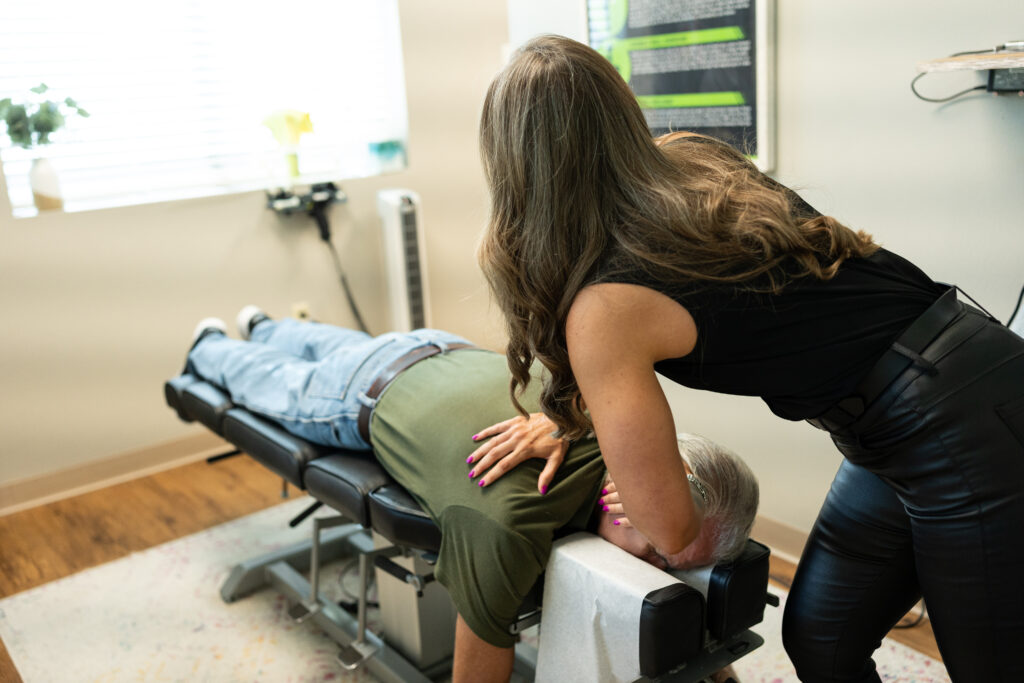
Most people don’t search for a chiropractor because they want better spinal health—they search because they’re in pain.
And that’s okay.
Pain is often what motivates someone to take the first step. Our job is to meet patients where they are, help them find relief, and then lead them to a much deeper understanding of what true health really means.
If we do our job well, patients eventually begin to see the connections between structure, function, adaptation, movement, and healing.
They realize that pain was never the whole story—it was simply the reason they walked through the door.
That’s what The Spinal Hygiene Weekly is all about.
Each week, you’ll receive one concise lesson designed to help you become a better chiropractor, improve patient retention, and create better long-term outcomes through spinal hygiene.
Each issue includes:
- One core spinal hygiene principle
- The science behind it
- Practical clinical application
- A patient communication script
- A Certified Spinal Hygienist Challenge
- Resources to help you go deeper
Let’s get started.
This Week’s Concept: Pain Is a Poor Measure of Health
One of the biggest mistakes in healthcare is using pain as the primary measure of health.
Patients do it.
Insurance companies do it.
Many healthcare providers do it.
But as chiropractors, we know better.
Pain is important—but it is also an unreliable indicator of what’s happening inside the body.
Many people have significant spinal degeneration with very little pain.
Others experience severe pain with only minor tissue irritation.
Pain is influenced by inflammation, stress, sleep, emotions, previous experiences, movement patterns, and countless neurological factors. It tells us something deserves our attention, but it rarely tells us the whole story.
If we only treat pain, we often miss the underlying dysfunction that caused it in the first place.
Why This Matters Clinically
Think about the patients you’ve seen this month.
How many waited weeks… months… or even years before scheduling an appointment because they assumed they were “fine” until the pain became unbearable?
Now think about the opposite.
How many patients felt dramatically better after just a few visits and immediately wanted to stop care—even though their posture, spinal mechanics, movement quality, and X-rays still showed significant dysfunction?
Both patients made the same mistake.
They used symptoms to measure health. 👎
Our responsibility is to teach patients that healing and symptom relief are not always happening at the same pace.
Pain often improves long before tissues fully recover, normal movement returns, or healthier function is restored. 👍
Clinical Application
When patients understand that pain is only one piece of the puzzle, several things begin to change.
They become less fearful when symptoms fluctuate.
They better understand the purpose of corrective care.
They are more likely to complete their treatment plans.
And perhaps most importantly, they begin making decisions based on long-term health instead of short-term comfort.
That shift changes everything.
Patient Script
Here’s a simple way to explain this concept during a Report of Findings:
“Pain is usually the last thing to show up and the first thing to leave. If we only use pain to measure your progress, we’re likely to stop treatment long before your body has fully healed. Our goal isn’t just to help you feel better—we want to help your spine function better so you stay better.”
Simple.
Easy to remember.
Easy for patients to understand.
Common Mistake
Many chiropractors unintentionally reinforce the idea that pain is the goal.
Every visit becomes:
“How’s your pain today?”
Instead, begin asking questions that shift the patient’s focus toward function.
Try questions like:
- How are you moving?
- What activities are becoming easier?
- Are you sleeping better?
- Can you do more without hesitation?
- How is your energy?
- What are you able to do now that you couldn’t do a few weeks ago?
Those conversations reinforce that health is much bigger than a pain score.
Spinal Hygienist Challenge
A patient says:
“My back doesn’t hurt anymore, so I think I’m done.”
What is the BEST response?
A. Great! Come back whenever it hurts again.
B. You’re probably fine if you’re feeling good.
C. Pain relief is encouraging, but it’s only one milestone. Let’s make sure your spine is functioning well enough to keep you feeling great and prevent bigger problems from returning in the future.
D. You’ll always need treatment forever.
Answer: C.
Pain relief is worth celebrating, but it should never be confused with complete recovery. Corrective care is about restoring healthier function—not simply quieting symptoms.
Go Deeper
This week’s lesson comes directly from the philosophy behind the Certified Spinal Hygienist program.
If your goal is to improve patient education, increase retention, and build a true spinal hygiene practice, these weekly lessons are designed to help you one concept at a time.
Next week:
Why Symptoms Lie
Until then, keep teaching patients that health is more than the absence of pain. It’s the body’s ability to function, adapt, and heal.
Better Education. Better Compliance. Better Outcomes.
See ya next Monday,
Dr. Tabor Smith D.C.
Certified Spinal Hygienist
|
|

Recent Comments